Last night I fell asleep on the subway and missed my stop. I got off the train at the next stop, and fortunately the opposite-direction train arrived right then, so I got on, backtracked one stop, and went home. Simple, right?
A Turkish proverb states, “No matter how far you’ve gone down the wrong road, turn back.” The proverb’s version of it is easy: you just turn around and head back to familiar ground so you can get your bearings and find the right direction. Or if you know the right direction, you turn that way and go there.
Why is it so much harder, then, in the life situations the proverb is really about? Don’t we at times remain fiercely committed to the wrong way? It’s certainly easy to see that fault in others. In real life, peer pressure is strong, and the embarrassment of admitting we’re wrong can be a serious demotivator. Shame is one of the most serious demotivators in human experience, and when we become stuck in shame we act in ways that are totally irrational, because it’s easier for us to continue down the wrong road than to admit we were wrong, possibly having to buck peer pressure, and turn back.
This turning back, teshuvah in Hebrew, is what Yom Kippur is all about. We pray, “Help us return to You, then we shall return,” our Hashivenu prayer from Lamentations. And the prophet Jeremiah, my namesake, calls out, “Return, wayward children.” And the Midrash Devarim Rabbah teaches, “The gates of prayer are sometimes open and sometimes barred, but the gates of repentance are never barred.” Now is always the right time to make teshuvah, to turn back toward the good and right.
This turning back, teshuvah in Hebrew, is what Yom Kippur is all about. We pray, “Help us return to You, then we shall return” (Hashivenu). And the prophet Jeremiah, my namesake, calls out, “Return, wayward children.” And the Midrash Devarim Rabbah teaches, “The gates of prayer are sometimes open and sometimes barred. But the gates of repentance are never barred.” Now is always the right time to make teshuvah, to turn back toward the good and right.
One teshuvah I made this year was that I joined the call for ceasefire in Gaza. For longer than I’m proud to admit, I supported Israel’s disastrous war in Gaza. I’m a citizen of Israel, so I don’t come to this with a predetermined anti-Israel mindset. I was horrified, as all decent people are, by Hamas’s atrocities on October 7, 2023. I bought into the idea that a military response was called for. I’m not a pacifist and I believe that sometimes military solutions are appropriate. I believe that some amount of civilian casualties are inevitable in war. So I started out after the Hamas attack as a war supporter. I remained a war supporter even as the civilian casualty count mounted and it became increasingly clear that the military campaign was making Hamas stronger, not weaker, while killing tens of thousands of Palestinian civilians and wreaking havoc on Gazan society and infrastructure. Over time, and it took me longer than I’m proud to admit, it became clear to me that nothing, no purpose, could ever justify what Israel has done and is doing to Gaza. I say this not because I’m proud of how long I remained a supporter of this war, but to inspire you, if you’re still supporting it, that it’s not too late to change.
Not even Israel’s existence can justify what Israel is doing. It is an absolute wrong to perpetrate a war of hate against a civilian population. It is an absolute wrong to answer one atrocity against civilians with another atrocity against civilians thirty times larger.
The good news is that Israel’s existence and security do not depend on this war; quite the opposite is true. Israel is not equipped to win a total war on three fronts in Gaza, the West Bank, and Lebanon. The last time Israel won a war was 1967. This may be why much of Israel’s security and military establishment has now joined the call for ceasefire. Netanyahu has his own interests, not Israel’s best interests, at heart in continuing on a path that is not only murderous but also extremely foolish.
Israel will not survive doubling down on this war. Some will celebrate that; I will mourn it. But it will come to pass if Israel continues down this wrong road. How fervently I pray that Israel will turn back.
Security will come from peace, as it did with Egypt and Jordan. Peace could take any of many forms, and I don’t know enough to know which solution is best, one state, two states, a confederation, or some other solution. Right now I suggest we focus 100% on ending the war, and leave the ideas and arguments about end states for later, once we stop this atrocity.
I finally called for ceasefire in January. Now it’s October and it’s still not too late. If you call for ceasefire tomorrow it won’t be too late. It’s never too late to do the right thing. It’s never too late to turn back from wrong. The gates of teshuvah are never barred.
I was wrong, and I changed my mind, and I’m sorry. I was wrong, and I changed my mind, and I’m sorry. Friends, I assure you, from the deepest part of my soul, that “I was wrong, and I changed my mind, and I’m sorry” is one of God’s holiest names. To say it is to invoke God; to mean it is to pray.
It can be so difficult to say that holy name, to pray that holy prayer. But try it with me right now. Think of a time when you were wrong and you changed your mind. Pray it with me: “I was wrong, and I changed my mind, and I’m sorry.”
That is the word of teshuvah, the turning of the soul back toward right. That is the word of redemption that paves the holy and difficult path back toward good. We’ve all strayed. We’ve all made mistakes. We’ve all sinned. The way back toward right is always open to us, and this holy word of redemption can help us get on our way back. Pray it with me one more time: “I was wrong, and I changed my mind, and I’m sorry.”
Prople can change, and societies can change. Germany has mostly changed; although the far right is resurgent there, most people have come to terms with the fact that their country and their compatriots acted very wrongly during the Holocaust. The U.S., a deeply divided country, is still grappling with the demons of racism and hate that it largely created, and is in many ways still fighting the Civil War. Some Americans have come very far toward recognizing and dismantling racism and other forms of hate, while other Americans have doubled down on those evils.
If the arc of history, as abolitionist preacher Theodore Parker said, does bend toward justice, it’s partly because of individual souls speaking that holy word of redemption one by one and together, “I was wrong, and I changed my mind, and I’m sorry.” The other part is because of children and students rejecting the mistakes of their parents and teachers, and consciously and intentionally passing on to their own children and students something better.
Teshuvah is an essential part of that promise. The world can only be better if each of us is better. And the first step to start moving in a better direction is to turn, is to make teshuvah. That’s why our highest holidays are dedicated to teshuvah. I hope your new year is sweet, sweeter than the last one, and may each of us always remember that it’s never too late, and it’s also never too early–the right time to change is always now.
Shabbat shalom, and g’mar chatimah tovah, may you be sealed for a good year in the Book of Life.
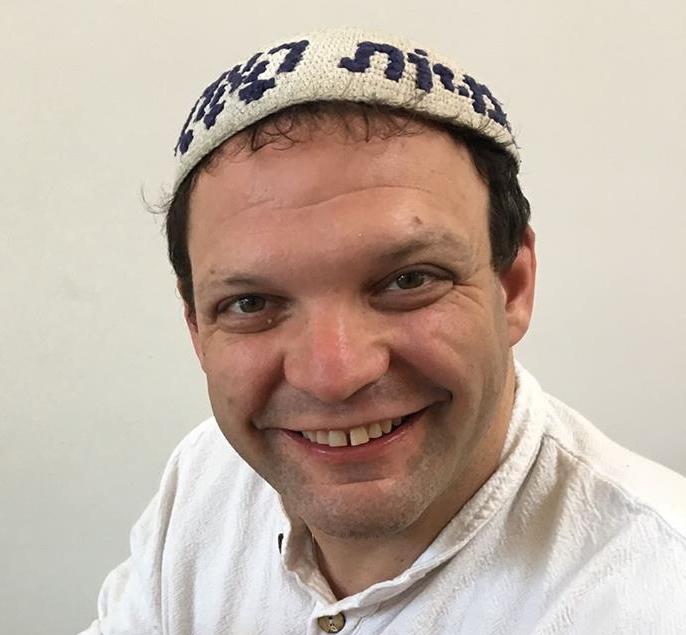
 Rabbi Jeremy Sher
Leave a comment